
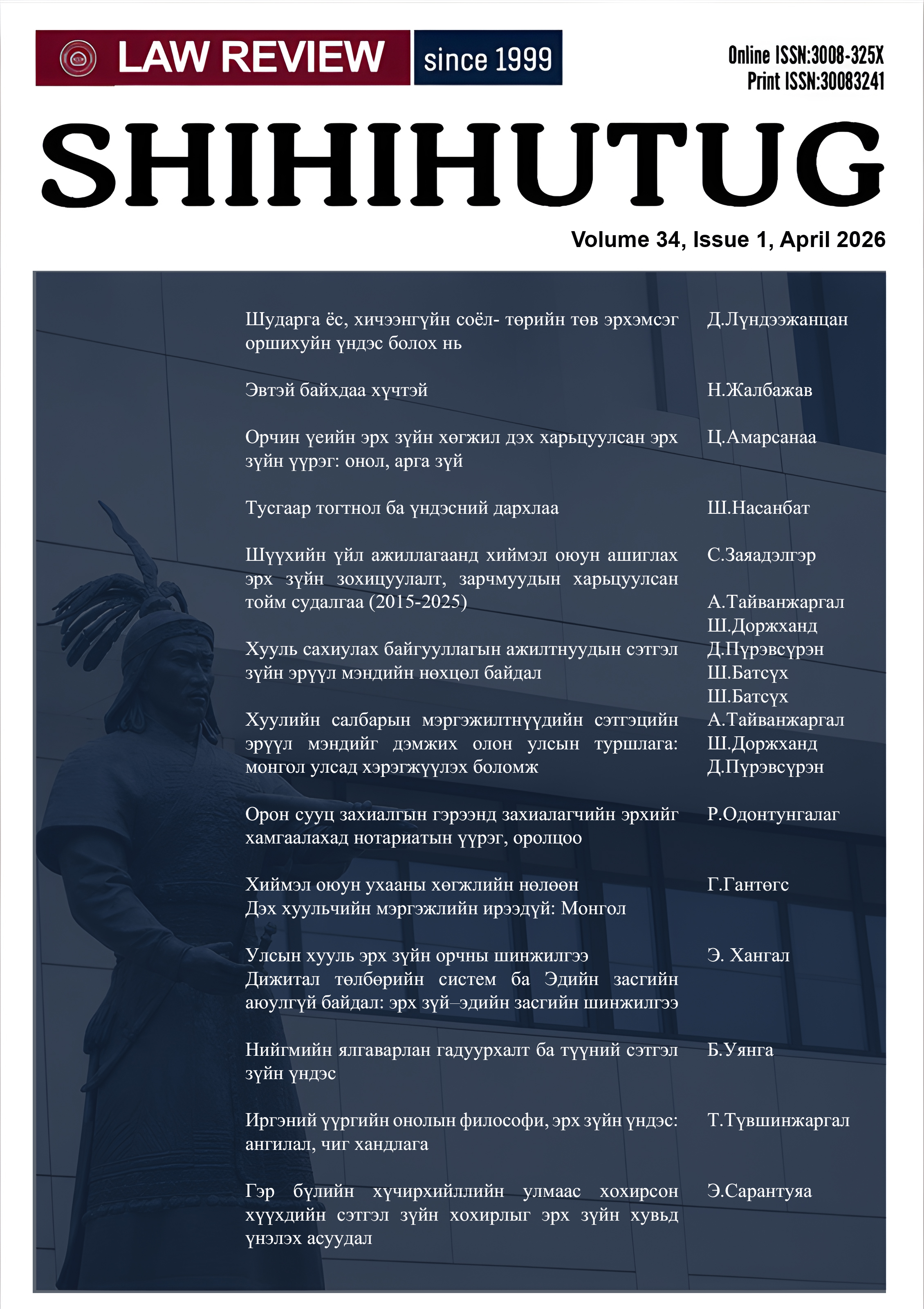
ШУДАРГА ЁС, ХИЧЭЭНГҮЙН СОЁЛ ТӨРИЙН ЭРХЭМСЭГ ОРШИХУЙН ҮНДЭС БОЛОХ НЬ
DOI:
https://doi.org/10.66582/9wt42x28Keywords:
Монголын төр ёс, төрийн тогтолцоо, төрийн алба, төрийн албаны соёл, төрийн албаны зарчим: /шударга ёс, хууль дээдлэх, эе эвийн сэтгэлгээ/, төрийн албаны шинэчлэлAbstract
Энэхүү өгүүлэлд Монголын төр ёс, төрийн дэг жаягийн үүсэл
хөгжил, түүний уламжлал ба шинэчлэлийн харилцан хамаарал,
мөн төрийн албаны соёлын мөн чанар, агуулгыг судлан авч үзэв.
Төрийн албаны соёлын үндэс болсон шударга ёс, эе эв, хариуцлага,
хууль дээдлэх ёс зэрэг үнэт зүйл, зарчмуудын агуулга, ач
холбогдлыг Монголын төрийн уламжлал, орчин үеийн төрийн
албаны хөгжлийн хүрээнд шинжилсэн болно. Судалгааны үр дүнд
төрийн албаны дэг жаяг, соёл нь төрийн байгууллын тогтвортой
байдал, төрийн үйл ажиллагааны үр нөлөө, төрийн нэр хүндийг
бэхжүүлэх чухал хүчин зүйл болохыг тодорхойлохыг зорив.
Өгүүллийн шинэлэг тал нь төрийн албаны дэг жаяг, соёлыг
Монголын төр, улсын бат бөх оршин тогтнохуй, төрийн эрхэмсэг
чанарыг хадгалан хөгжүүлэх үнэт зүйлсийн нэгэн суурь үндэс
хэмээн үзэж, түүний онолын болон практик ач холбогдлыг
тодруулах оролдлого хийсэнд оршино.
Downloads
Published
Issue
Section
License
Copyright (c) 2026 ШИХИХУТУГ СЭТГҮҮЛ

This work is licensed under a Creative Commons Attribution 4.0 International License.